
Reasons to Be Cheerful featured our Silent Trails pilot in collaboration with Quiet Parks International, with the headline: “Preserving Natural Quiet in an Ever-Louder World.” Reading it provided unexpected validation, as they fully understood the initiative we piloted with Metro Vancouver Regional Parks.
Reading it brought unexpected validation. They understood exactly what we piloted with Metro Vancouver Regional Parks.
The Data Speaks
The results of the Silent Trails visitor surveys speak volumes:
- 92% of visitors rated their Silent Trail experience as quiet
- 78% reported enhanced ability to hear nature sounds
- 73% found Silent Trails more enjoyable than regular park trails
- Campbell Valley’s Ravine Trail: 96% quiet rating
- Pacific Spirit’s Top Trail: 89% quiet rating
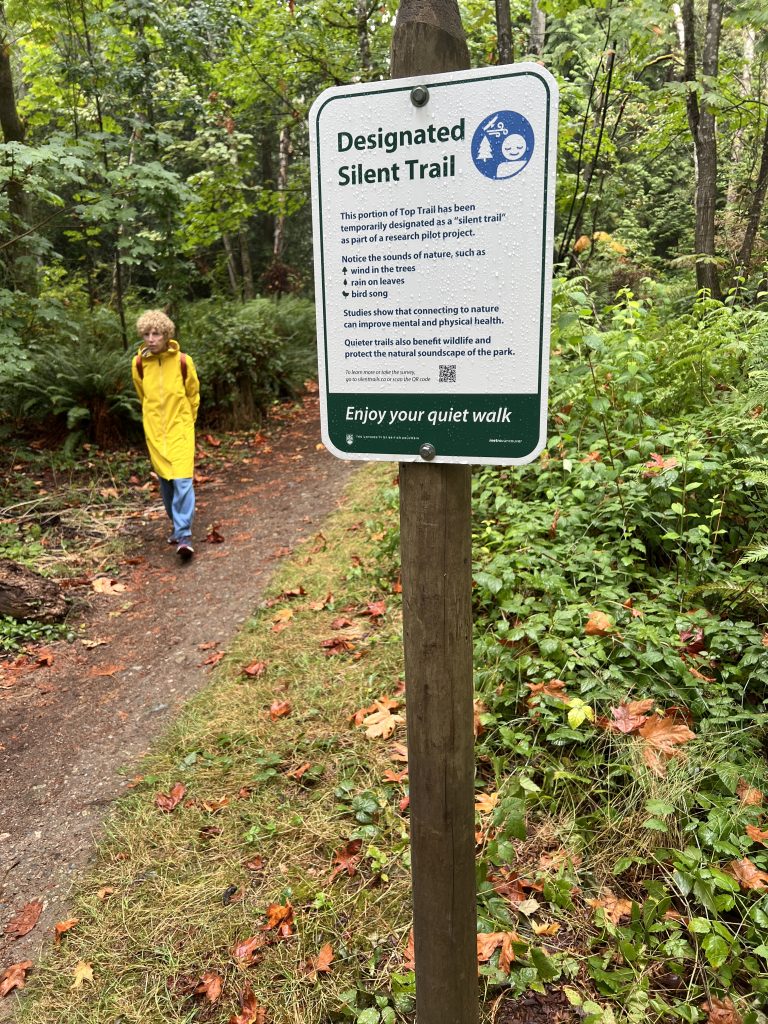
Urban Noise vs. Trail Design
Pacific Spirit Park confronts urban challenges, such as aircraft noise, traffic, and construction, yet still achieved an impressive 89% satisfaction rating for quietness.
Campbell Valley’s primary obstacle is the gravel surface of its trails. Sixty-five percent of visitors to the Ravine Trail reported that the gravel interfered with their ability to hear natural sounds. Sometimes, the very infrastructure that is designed to enhance our experience can create its own acoustic difficulties.
In our final report to Metro Vancouver Regional Parks, we included requests from the community for:
- Alternatives to gravel surfaces at Campbell Valley
- Extended sections of trails
- Seating areas
The Community Speaks
Data can’t express lived experiences. The visitor experiences are evidence of a successful intervention in an increasingly noisy world:
“As you got to the end of the trail then you heard the traffic, which reminds you how nice the silence was.”
“The peaceful quiet sound”
“Owl hoots!”
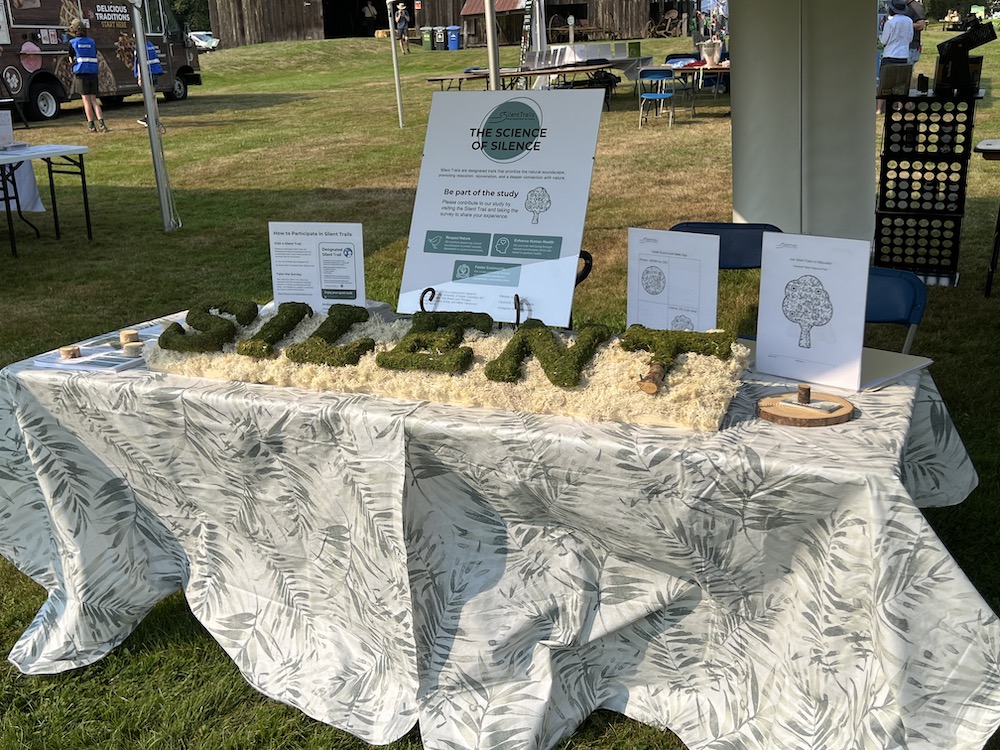
Learning from Pandemic Silence
The article captured something important about 2020. When human noise disappeared, we collectively remembered what natural soundscapes actually sound like. Matt Mikkelsen from Quiet Parks International called it “a turning point for our cause.”
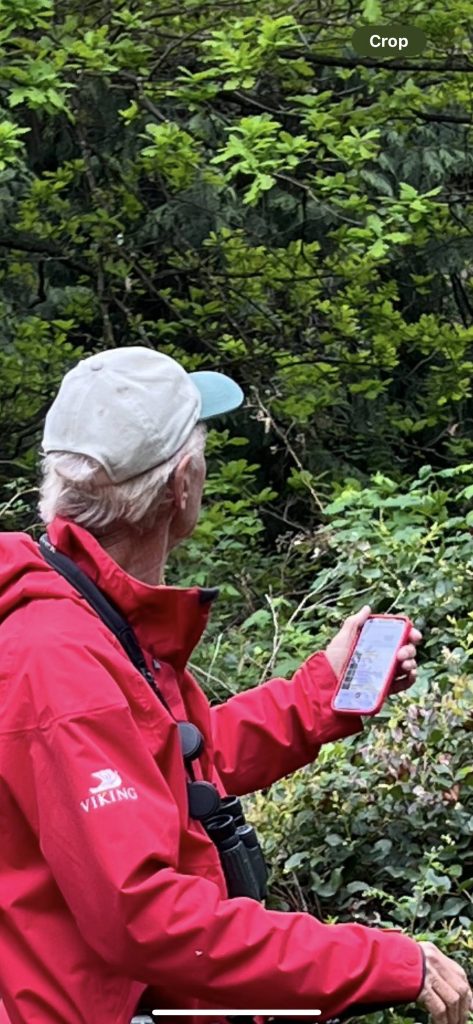
My favourite birder, Peter Ward has lamented how he misses those days when he was out on the trails and could hear the birds without any human noise interrupting.
That moment still resonates. We proved intervention works.
Community-level Interventions
Being featured alongside Glacier National Park and the Boundary Waters feels unexpected. But our urban and suburban trails serve a different function. Not everyone can access remote wilderness.
Silent Trails challenges the notion that you have to “get away” to experience the health benefits of listening to natural sounds. We believe nature-based health experiences shouldn’t be confined to remote or protected areas. They belong in our daily lives, right in our communities.
Our Silent Trails proved therapeutic natural soundscapes can exist within Vancouver. When these quiet urban spaces disappear to development or neglect, they’re gone forever. That’s why protecting them matters now.
The article mentioned our monthly Sit Spot Club gatherings – 30 minutes of intentional listening in natural settings.
When people learn to listen deeply in designated quiet spaces, they become advocates for preserving those spaces. Every Silent Trail visitor potentially becomes a soundscape steward.
Sit Spot Club Connection
The article mentioned our monthly Sit Spot Club gatherings – 30 minutes of intentional listening in natural settings.
Join us monthly or create your own experience. Instructions for hosting your own sit spot gathering are at sitspot.club.
When people learn to listen deeply in designated quiet spaces, they become advocates for preserving those spaces. Every Silent Trail visitor potentially becomes a soundscape steward.
Community-driven change happens with or without official support.
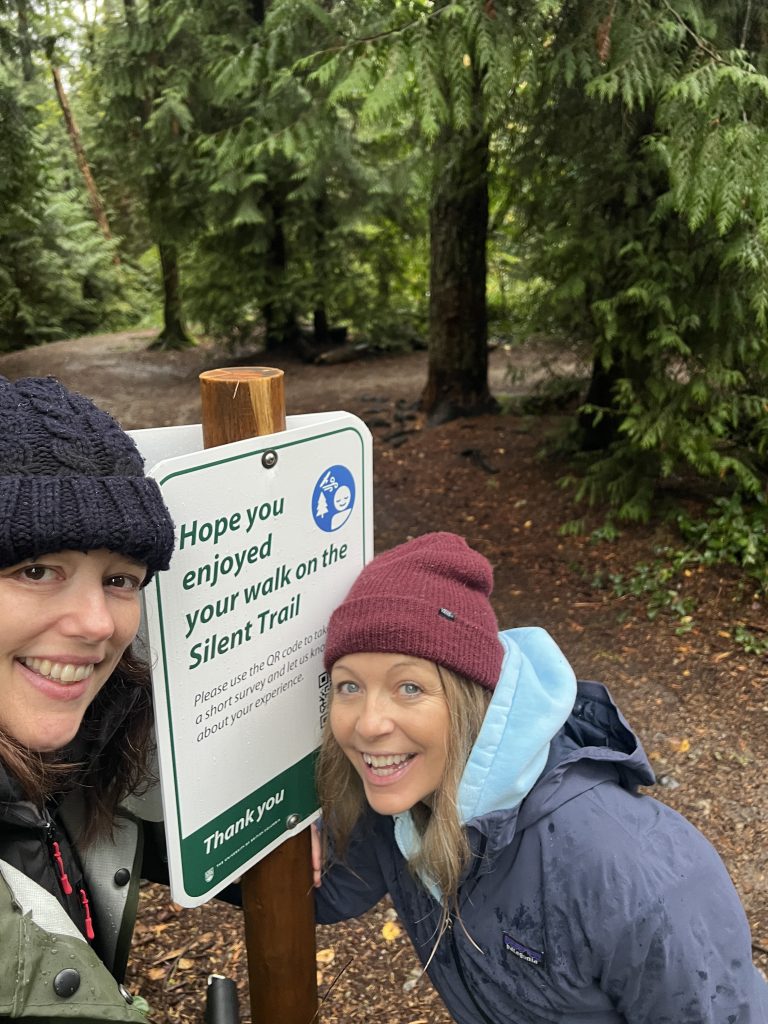
Moving Forward
The Silent Trails team is working on what’s next:
- Academic paper submission for peer review
- Dr. Brown is speaking at the 2nd International Conference on Forest Therapy – Healing with Nature at the University of British Columbia (UBC)
- Community partner outreach
- Grassroots advocacy for soundscape preservation
We don’t need federal legislation or massive funding to create meaningful change in human-nature acoustic relationships. We need strategic trail selection, simple signage systems, community engagement, and data collection that proves impact. The numbers prove it works. Now we keep building grassroots momentum.
Your 30-Minute Nature Dose
Research shows that 30 minutes of nature exposure significantly reduces depression and high blood pressure, while 20-30 minutes sitting or walking in nature provides the greatest payoff for lowering cortisol levels.
Here’s your challenge: spend 30 minutes in any natural space this week (we vote for Top Trail or Ravine Trail if you’re in the area 😀). No phones, no conversation, just intentional listening. Studies with college students found that even 30-minute weekly nature walks demonstrated cumulative benefits in learning engagement.
Once you start listening to natural soundscapes, it’s really hard to stop.
And that’s exactly the point. 🌲💚
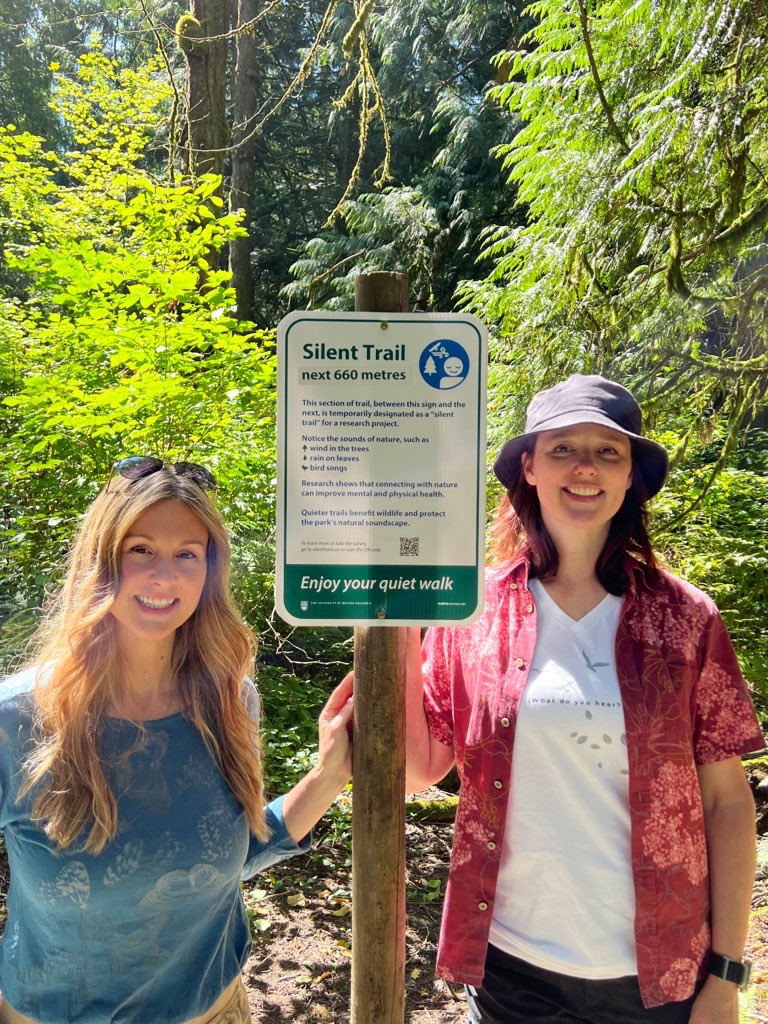
Visit silenttrails.ca for trail maps and community updates. Our grassroots approach to acoustic restoration continues. Every listener matters.
Shout-out to community advocates keeping this movement alive and to the media for covering it. Small actions, big impacts.
Leave a Reply